01
Being efficient together is not the same as feeling known.
There may be affection in remembering groceries, planning family visits or keeping life on track. Those things count. But if every exchange is practical, it can be difficult to notice what the other person is excited about, worried about or quietly hoping for.
Before assuming you have nothing left to say, ask whether your conversations have had room to wander. Pick a moment when neither person is rushing, working or trying to fall asleep. You can ask, “Would now be a good time for one question, or would another time be better?”
02
Get curious before deciding what the silence means.
A quiet evening does not tell you, by itself, whether someone is tired, distracted, upset or comfortable. Guessing can leave both of you answering a story the other person never told.
Try describing what you notice and what you miss: “We have mostly talked about errands this week. I miss hearing what is happening in your world.” Then leave space for an answer, even if it is different from what you expected. You do not have to pretend that repeated dismissal feels okay.
03
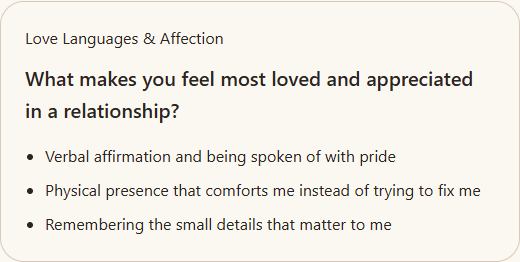
Ask about the affection that actually reaches each of you.
One person may enjoy a hug after work; another may need a little quiet before being touched. A thoughtful message, making tea or remembering something important can each carry care. None is a universal formula.
Ask for one specific, welcome gesture. “Would you send me a little message when you think of me?” is easier to understand than “Be more romantic.” Let your partner say what feels natural to give, and say honestly what matters to you. Touch and intimacy are invitations, never obligations.
04
Let the next small action matter.
After a conversation, choose something small enough to try: an evening walk, tea without screens, or checking in before the day gets busy. Make it an agreement you both want rather than another task for one person to manage.
Come back to it: “Did that feel good to you? Would you like to do it again?” If someone repeatedly declines, there is no perfect wording that can carry their share. You can name your needs, seek support for yourself and decide what boundaries you need.
05
Leave room for play, not a performance.
Reconnection does not have to be a serious meeting every time. Remember an early date, share a surprising hope, or find out what would make an ordinary Saturday feel special. Happy couples can enjoy this curiosity too.
You do not need to become a more impressive version of yourself to deserve attention. Nor can a question guarantee desire, faithfulness or a particular outcome. What it offers is a chance to learn what each of you wants and whether you want to move toward it together.